


The Womb
Утробата

Worth a detour
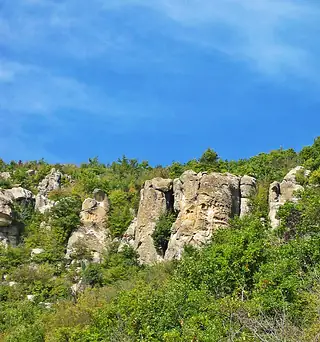
A natural fissure in a cliff above the Arda, sixteen metres deep, that somebody in prehistory extended by another six and shaped deliberately. At the back is a cut altar. Around midwinter, with the sun low enough, light comes through an opening in the roof and reaches it. Whatever you make of the interpretation, the carving is unambiguous, and the walk up — about an hour, with a scramble at the end — is part of it.
Story
Background
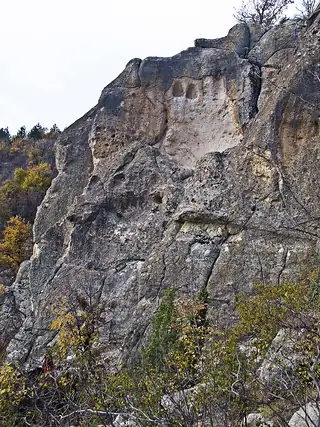
The site is in the Tangardak Kaya rocks, about twelve kilometres north-west of Kardzhali, near the village of Ilinitsa. Goatherds showed it to a local teacher in 1994; the archaeologist Nikolay Ovcharov documented it in 2002. The dating is loose — somewhere between the Chalcolithic and the end of the Bronze Age — because there is almost nothing to date. What there is, is the rock itself.
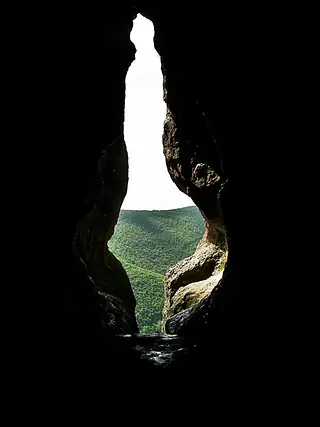
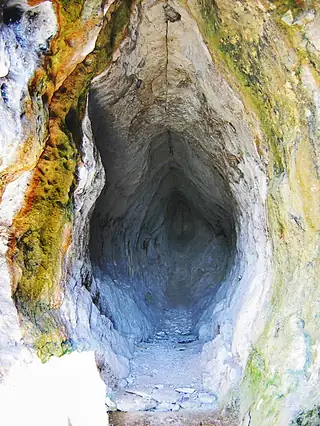
The opening stands about three metres high and two and a half wide, and the cleft behind it runs twenty-two metres into the cliff. The first sixteen are natural karst; the last six were cut by hand, narrowing to a carved altar at the end. Water seeps continuously down the walls. The form is not ambiguous and neither, apparently, was the intention: this reads as a sanctuary shaped as a body, and the standard interpretation is a fertility cult bound up with the sun.
The part that gets written about is the light. Around midday in the weeks near the winter solstice, when the sun sits at its lowest, a shaft comes through a gap in the roof of the cleft and travels along the floor towards the altar. It is a real effect rather than a story — though it depends on clear weather, and on being there in December rather than August. The path from the road is marked and has shelters along it. Allow an hour up, and nothing at all at the top.
What this kind of place is
Archaeological site
A place where material remains have been recorded. In Bulgaria that can mean anything from a scatter of Roman pottery in a ploughed field to a walled city under excavation. Unless a site has a ticket office, assume there is no sign, no path and no shade.
From open data
Dates and details
- Period
- prehistoric
- Municipality
- Kardzhali
- Elevation
- 704 m
English Wikipedia
The Utroba Cave, also known as Womb Cave, is an ancient cave sanctuary in Kardzhali Province, Bulgaria. Located in the Eastern Rhodope Mountains near the Ilinitsa village, the cave resembles a human vulva and dates to the Thracian period. Historians believe that it was once used as a fertility shrine.
English Wikipedia · CC BY-SA 4.0
Photographs




Where the information comes from
About & sources
Last checked Sep 17, 2026
Descriptions, recommendations and the audio scripts are written for this guide.
Report a problem