


Strandzha Nature Park
Странджа

Worth a detour
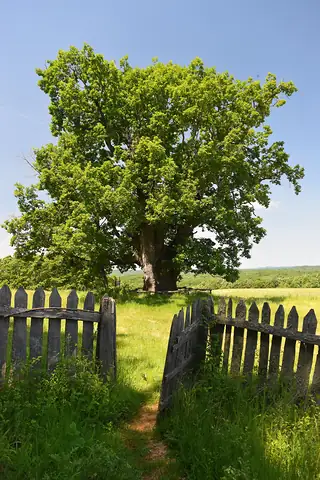
A thousand square kilometres of oak forest with an evergreen understorey that survives nowhere else in Europe, kept going by the sea. It is also the emptiest corner of the country — nineteen villages, two small towns and about seven thousand people between them. Come in spring, when the rhododendron is out, or to Balgari on the night of 3 June for the fire dancing, which is still the real thing rather than a show.
Story
Background
Declared in January 1995 and covering 1,161 square kilometres, roughly one per cent of Bulgaria, Strandzha is the largest protected territory in the country. About four fifths is deciduous forest and around a third of that is old growth. What brings botanists is the laurel-type undergrowth beneath the oaks — Pontic rhododendron, Caucasian whortleberry, and dozens of relict species that held on here when the rest of the continent cooled. Somewhere over sixty relict and fifty endemic plants have been recorded.
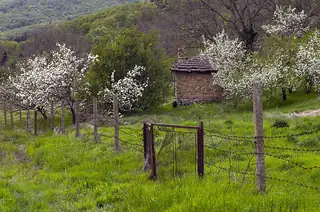
Five reserves sit inside the park, among them Silkosiya, protected in 1931 and the oldest in Bulgaria. The Veleka runs 147 kilometres to the sea at Sinemorets; the Rezovska, 112 kilometres, is the Turkish frontier for its whole course. Between the two, the interior is forest and lapsed pasture with Malko Tarnovo as the only town of any size.
Nestinarstvo, the barefoot dance on embers on the feast of Constantine and Helena, is performed at Balgari on 3 June and has been on the UNESCO intangible heritage list since 2009. Practically, expect gravel roads, few petrol stations and patchy signal. The coastal villages fill up in August; the interior stays empty all year, which is the point of it.
From open data
Dates and details
- Built
- 1995
- Municipality
- Burgas
- Area
- 1,161 km²
English Wikipedia
Strandzha Nature Park is the largest protected area in Bulgaria spanning a territory of 1,161 square kilometres (448 mi2) in the Strandzha Mountain in the extreme south-eastern corner of the country on the border with Turkey. It was established on 25 January 1995 to protect ecosystems and biodiversity of European importance, as well as the traditional cultural, historical and folklore heritage of the region.
English Wikipedia · CC BY-SA 4.0
Photographs




Where the information comes from
About & sources
Last checked Sep 17, 2026
Descriptions, recommendations and the audio scripts are written for this guide.
Report a problem