


Sozopol Archaeological Museum
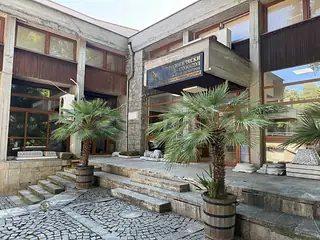
Археологически музей, Созопол
Worth a detour
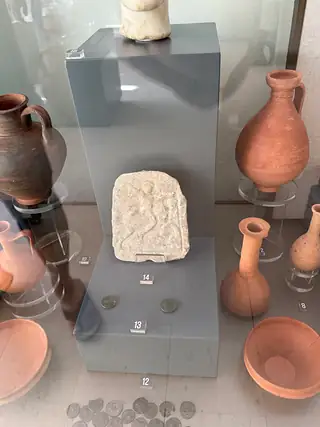
Two things here are not available anywhere else in the country: the richest collection of ancient Greek vases in Bulgaria, seventh to third century BC, dug out of the Apollonia necropolis; and the marble reliquary found under the altar on St Ivan island in 2010. Add stone and lead anchors from the second millennium BC and the oldest water supply yet found in Bulgaria, and an hour is easily spent.
Story
Background
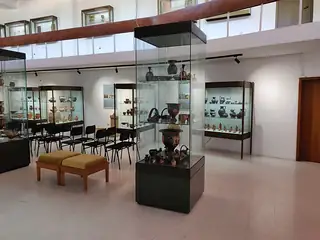
The museum is one part of the Sozopol museum centre, created in 2014 to hold the town's archaeology, ethnography and art under one institution, and named in 2018 after the historian Bozhidar Dimitrov, who came from here. More than a thousand exhibits cover the fifth millennium BC to the eighteenth century AD.
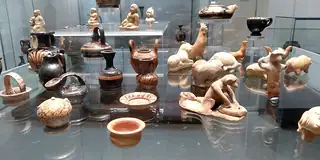
The vases are the collection. Apollonia buried its dead with imported Attic and East Greek pottery for three centuries, and the necropolis has been worked since the early twentieth century; what came out is a sequence of shapes and painters that a specialist reads as a trade history and everyone else simply looks at. Alongside it are the anchors — stone ones, then lead-stocked ones, a straightforward illustration of how the technology changed — and a fragment of water pipe from the end of the fifth century BC.
The reliquary is the thing most visitors come for. In July 2010 a marble box was found beneath the altar of the earliest church of the St John the Forerunner monastery on St Ivan island, with a small limestone casket beside it whose Greek inscription records the transfer of relics and names the twenty-fourth of June. Radiocarbon work at Oxford placed the one datable bone around the first century. The relics themselves are shown in the Sts Cyril and Methodius church in summer; the reliquary is here. Winter visitors should note the museum is shut at weekends from mid-October.
What this kind of place is
Museum
Bulgarian museums outside the capital often keep short hours, close one day a week — Monday most commonly — and shut for lunch. Labels are frequently Bulgarian-only in the smaller ones, and a good many charge separately for the right to photograph.
From open data
Dates and details
- Built
- 1961
- Part of
- 100 Tourist Sites of Bulgaria
- Municipality
- Sozopol
Photographs
Where the information comes from
About & sources
Last checked Sep 16, 2026
Descriptions, recommendations and the audio scripts are written for this guide.
Report a problem


