


Shumen Fortress
Шуменска крепост

Worth a detour
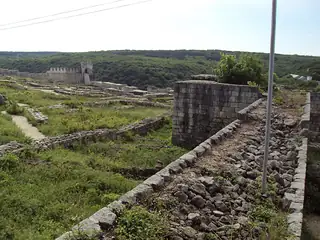
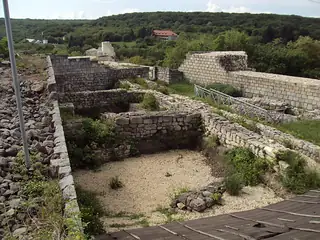
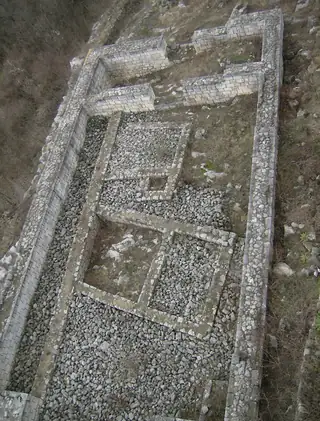
This was a full walled town, not a garrison post: six churches, a citadel, paved main streets and twenty-odd lanes dividing residential quarters, on a spur of the Shumen plateau with the modern city spread out below. It was destroyed in 1444 and nobody came back, so the whole plan survives. Late afternoon is the hour — the light comes across the plain and the walls stop being grey.
Story
Background
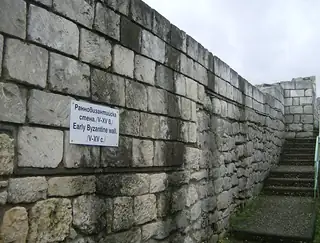
People have lived on this rock since the Iron Age. There was a Thracian settlement from around the fifth century BC, Roman towers and walls in the second to fourth centuries AD, and a Byzantine garrison after that. But the layer you are walking on is the late medieval one. In the twelfth to fourteenth centuries Shumen was one of the significant urban centres of the Second Bulgarian Empire, with an inner citadel, a full circuit of walls, six churches inside them and a street grid tight enough to read on the ground.
It fell to Ottoman forces in 1388, and was then destroyed outright in 1444 in the fighting around the campaign of Władysław III of Poland that ended at Varna. After that it was simply left. The town regrew down on the plain where modern Shumen is, and the fortress stayed empty for five centuries, which is the only reason its plan is legible today.
Excavation began in 1957 and a large restoration programme ran in the early 2010s. That restoration is the thing to be clear-eyed about: substantial stretches of wall and tower have been rebuilt to give visitors something vertical to look at, and it is not always obvious where the medieval stone stops. The site museum holds finds from here and from the nearby capitals at Pliska and Preslav. Above you on the plateau rim stands the Founders of the Bulgarian State monument, and the two are usually done in the same afternoon.
What this kind of place is
Fortress
What Bulgaria calls a krepost is a fortress rather than a residential castle — a defended hilltop, usually medieval on Roman or Thracian foundations. A fair number have been heavily rebuilt with EU restoration money since 2010, and the new masonry is generally easy to tell from the old.
From open data
Dates and details
- Part of
- 100 Tourist Sites of Bulgaria
- Municipality
- Shumen
English Wikipedia
The Shumen Fortress is an archaeological site overlooking the city of Shumen in north-eastern Bulgaria. It is an ancient fortress with historical links to a village nearby traced to early Iron Age and later owned by the Thracians in the 5th century BC. Then, from 2nd to 4th centuries AD, it was controlled by the Romans who built towers and walls, and it was refurbished by the Byzantines as their garrison town.
English Wikipedia · CC BY-SA 4.0
Photographs




Where the information comes from
About & sources
Last checked Sep 16, 2026
Descriptions, recommendations and the audio scripts are written for this guide.
Report a problem