


Saeva dupka cave
Съева дупка

Worth a detour
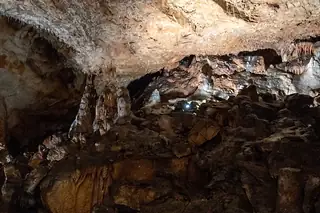
Five chambers over roughly two hundred metres of gallery, lit since 1967 and relit in 2004, with one hall — the Haramana — whose acoustics have been used for actual performances rather than as a line in a leaflet. It is a few kilometres off the Hemus motorway near the village of Brestnitsa, which makes it the easiest cave stop between Sofia and the north. Take a layer.
Story
Background
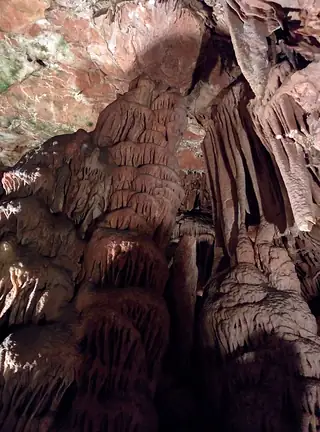
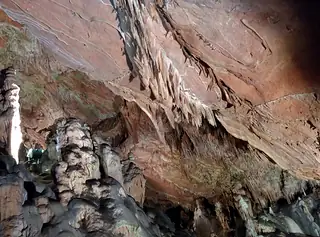
The name is traced to two brothers, Seyu and Sae, said to have sheltered here under Ottoman rule; excavation has shown the cave was used as far back as Roman times. The halls are named in the plain way Bulgarian caves usually are: Kupena, the entrance chamber; Srutishteto, the collapse; the Haramana, which people call the concert hall; Kosmos, for a stalagmite that looks like a rocket; and Beliya Zamak, the White Castle, the formation that ends up on every photograph of the place.
The acoustics are the distinguishing feature and they have been used seriously — Bulgarian singers and visiting choirs have both performed down there. The rest is a competent, well-lit, short show cave, which after a few hours on the motorway is exactly enough.
It also matters as a bat site: eight species use it seasonally, several of them European conservation priorities, including greater and lesser horseshoe bats.
What this kind of place is
Cave
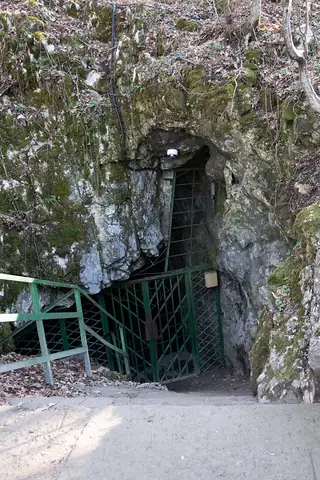
A cave entrance. Bulgaria has recorded more than six thousand caves and ten or twelve are lit, laid out and open with a guide; everything else is caving, not sightseeing. Even show caves hold around 10 °C all year, so a jacket matters in August more than in January.
From open data
Dates and details
- Part of
- 100 Tourist Sites of Bulgaria
- Municipality
- Brestnitsa
- Elevation
- 520 m
- Length
- 210 m
English Wikipedia
Saeva dupka is a cave in northern Bulgaria near the village of Brestnitsa, Lovech Province (43°2′N 24°11′E). The cave has naturally formed 400 meters of corridors and halls. The cave has hosted many choral music performances, thanks to the excellent acoustic conditions.
English Wikipedia · CC BY-SA 4.0
Photographs




Where the information comes from
About & sources
Last checked Sep 17, 2026
Descriptions, recommendations and the audio scripts are written for this guide.
Report a problem