


Philippopolis
Филипопол

Worth a detour
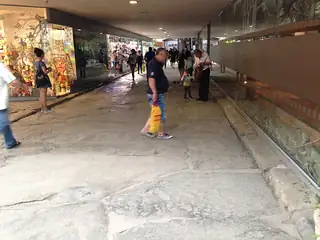
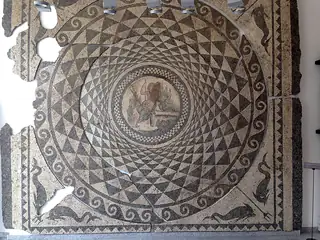
Plovdiv does not have an archaeological zone, it has a city built on top of one, and the Roman layer keeps breaking the surface — a stadium under the shopping street, a forum behind the post office, a theatre on the saddle between two hills, mosaics under a new roof by the boulevard. Walking between them takes twenty minutes. Doing them properly takes a day.
Story
Background
People have lived on these hills more or less continuously for around eight thousand years, which is the claim that gets Plovdiv onto lists. The Thracians had a town called Eumolpias on Nebet Tepe; Philip II of Macedon took it in 342 BC and renamed it after himself; the Romans made Philippopolis the seat of the province of Thrace and built accordingly.
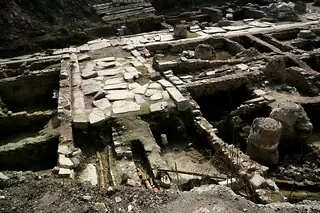
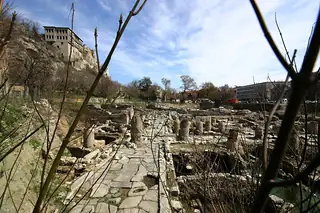
The Roman city is the layer you can actually walk. Its street grid still shapes the modern centre, which is why the excavated fragments line up so oddly with the shops. The theatre on the saddle between two of the hills, uncovered after a landslide in the early 1970s, is still used for concerts. The stadium runs the length of the pedestrian street. The forum lies behind the central post office, open to the air and free to walk through. The Bishop's Basilica and the Small Basilica cover the late antique city, when this was a Christian provincial capital.
None of it is signposted as a circuit, and that is half the pleasure — you come out of a café and there is a wall. The two useful things to know are that combined tickets exist for the municipal sites, and that most of them close for half an hour in the middle of the day.
From open data
Dates and details
- Municipality
- Plovdiv
English Wikipedia
Plovdiv is the second-largest city in Bulgaria and the most populous city in the Bulgarian part of the historic region of Thrace, located 144 km (93 miles) southeast of the capital Sofia. It had a population of 329,489 as of 2024 and 540,000 in its greater metropolitan area. An important economic, transport, cultural, and educational hub of Bulgaria, Plovdiv was the European Capital of Culture in 2019, and joined the UNESCO Global Network of Learning Cities in 2016.
English Wikipedia · CC BY-SA 4.0
Photographs




Where the information comes from
About & sources
Last checked Sep 17, 2026
Descriptions, recommendations and the audio scripts are written for this guide.
Report a problem