


Petrova niva
Петрова нива

Worth a detour
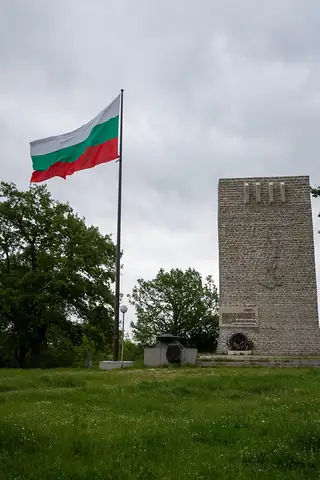
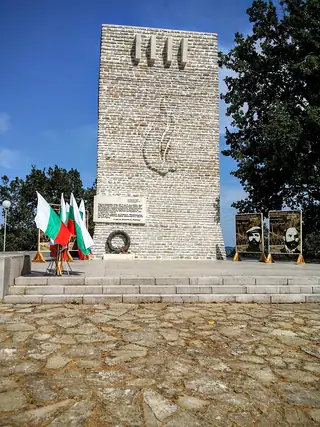
In the last days of June 1903 more than three hundred delegates met in a clearing high in Strandzha and agreed the plan for the rising that broke out on the feast of the Transfiguration that August. The clearing is now a memorial complex with a monument of 1958, an ossuary chapel of 2003 and a small exposition, and it stands on one of the finest viewpoints in the mountain. Entry is free.
Story
Background
The congress of the Adrianople revolutionary district opened on the twenty-eighth of June 1903 at two in the afternoon, chaired by Vasil Paskov, and sat for three days. It gave the military command to Mihail Gerdzhikov and set the rising for the end of July; it was proclaimed on the nineteenth of August, the Transfiguration, which is why it is called the Preobrazhenie rising. The republic it briefly established in Strandzha lasted a few weeks.
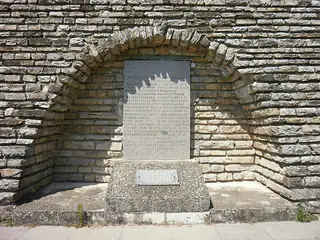
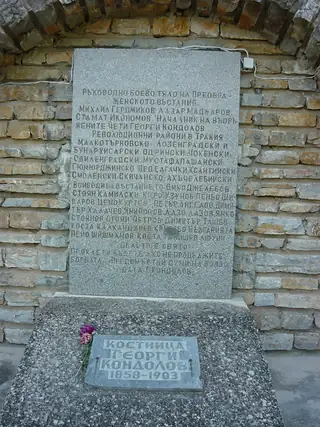
The monument was opened on the sixteenth of August 1958 and the bones of the voivode Georgi Kondolov are interred in it. For the centenary in 2003 a chapel-ossuary dedicated to St Petka was built beside it. A museum exposition of photographs and documents, run as an outstation of the Malko Tarnovo museum, is on the site.
Practically: it is near the village of Stoilovo, it is free, and it is unlikely to be staffed outside the summer, so telephone the Malko Tarnovo museum if the exposition matters to you. Official sources give the distance from Malko Tarnovo as twenty, thirty-two and thirty-four kilometres, and none of them describes the road, so allow more time than you expect. A national commemoration is held here on a Saturday in August each year — the date moves, so check locally. Go for the view even if the history means nothing to you: the whole forested bowl of upper Strandzha opens out below.
What this kind of place is
Memorial
Bulgaria fought four wars in thirty-one years — two Balkan wars and both world wars — and almost every village carries a stone with a list of names that is often a large share of the men it had. Later memorials from the socialist period are a separate and more contested layer; a number have been repainted, moved or partly removed since 1989.
Photographs




Where the information comes from
About & sources
Last checked Sep 17, 2026
Descriptions, recommendations and the audio scripts are written for this guide.
Report a problem