


Kordopulov House
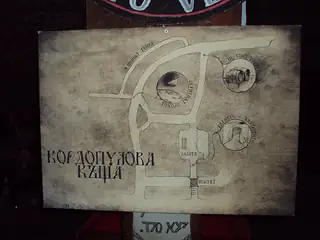
Кордопулова къща
Worth a detour
It was built as a working winery with living quarters on top, and the cellars are the point: tunnels cut into the soft Melnik sandstone, cool in August, still holding barrels of wine made from the broad-leaved Melnik vine. The rooms upstairs are handsome enough, but nobody remembers them. Tastings are sold separately, and the winter opening days are fewer than the summer ones.
Story
Background
Melnik has a few hundred inhabitants and calls itself a town, which it emphatically was when this house went up in 1754. The wine trade ran from here down towards the Aegean, and the merchant family that gave the house its name built the largest surviving Revival-period house in Bulgaria — not as a show of wealth so much as a machine for making and storing wine.
Start at the bottom. The cellars are cut straight into the sandstone hill behind the house, a couple of hundred metres of tunnel in total, with barrels standing in the side chambers. The rock keeps the temperature down without any help, which is the whole reason the house is where it is. The upper floor is the domestic half: carved ceilings, coloured glass, the wide reception room that Revival houses always have.
The wine still made here comes from the shiroka melnishka loza, the broad-leaved Melnik vine — a variety that does well in this dry, sheltered pocket under Pirin and almost nowhere else. Tasting packages cost several times the entry ticket, so decide which visit you are making before you go in.
What this kind of place is
Museum
Bulgarian museums outside the capital often keep short hours, close one day a week — Monday most commonly — and shut for lunch. Labels are frequently Bulgarian-only in the smaller ones, and a good many charge separately for the right to photograph.
From open data
Dates and details
- Built
- 1754
- Part of
- 100 Tourist Sites of Bulgaria
- Municipality
- Melnik
- Heritage status
- monument
- Floors
- 3
English Wikipedia
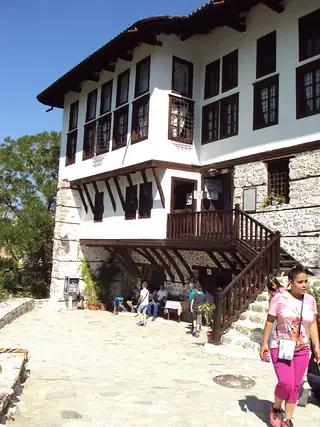
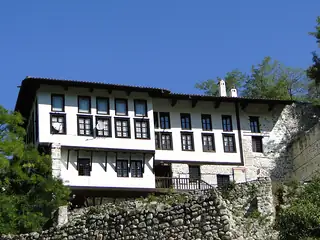
The Kordopulov (or Kordopulov's) House is a large late Ottoman style house in the southwestern Bulgarian town of Melnik. It was built in 1754 specifically for wine production and was bought by the Greek merchant Manolis Kordopoulos. The house, possibly the largest of its kind and period, is located in the town's eastern part and consists of a ground floor that includes a wine cellar, a semi-basement for economic needs and a bay floor intended to be inhabited.
English Wikipedia · CC BY-SA 4.0
Photographs

Where the information comes from
About & sources
Last checked Sep 16, 2026
Descriptions, recommendations and the audio scripts are written for this guide.
Report a problem


