


Jewish Cemetery in Karnobat
Еврейско гробище в Карнобат

Worth a detour
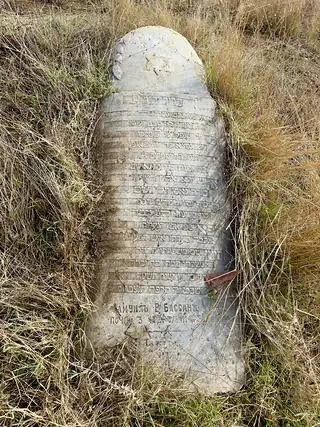
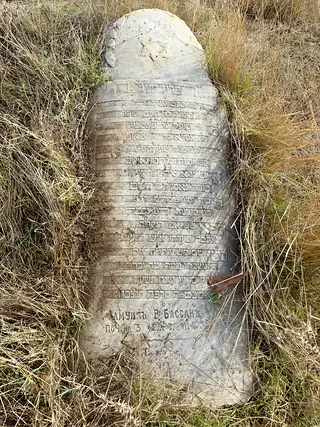
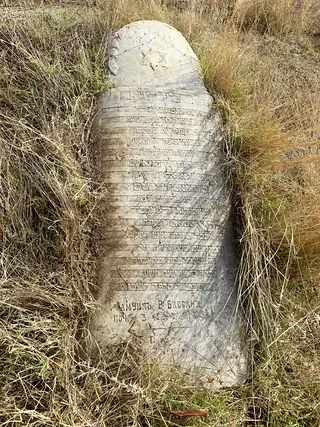
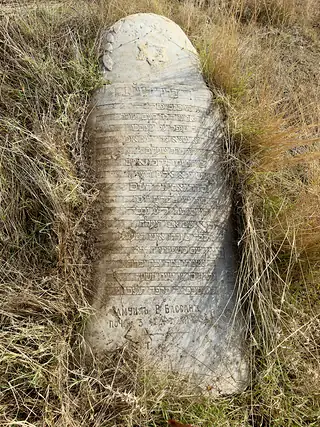
About fifty decares of hillside outside Karnobat, holding close to a thousand marble and stone gravestones, with inscriptions in Hebrew, Ladino, French, German and Bulgarian. The earliest deciphered is dated 1598. The town museum describes it as one of the most significant large medieval necropolises in the Balkans and among the earliest Sephardi burial grounds. Almost nobody visits.
Story
Background
The Sephardim expelled from Spain in 1492 reached the Ottoman Balkans within a generation, and Karnobat was one of the places they settled. The necropolis grew over four centuries and was last systematically studied by a team of scholars between 1991 and 1995. Not all the graves were recorded and not all the epitaphs have been read.
The stones themselves are the interest. Most are marble brought from Malko Tarnovo, a hundred and fifty kilometres south, which is a considerable statement of intent for a provincial community. The oldest carry carved figures indicating the sex, the education or the trade of the person buried: an inkwell and quill, a needle, scissors, a belt, buckles, flowers. Reading them is a short course in who the town's Jews were.
The condition is what you would expect of an unfunded site with no surviving community to look after it: stones down, grass high, no path and no board. Go in early spring or late autumn, wear boots, and behave as you would in any burial ground. The town museum, which curates the site along with the clock tower, the hamam and the old mosque, is the place to ask before you go — it is on Aleksi Neychev Street and opens by prior appointment, while its house museum on Dimitar Polyanov Street keeps weekday hours.
From open data
Dates and details
- Municipality
- Karnobat
Photographs




Where the information comes from
About & sources
Last checked Sep 17, 2026
Descriptions, recommendations and the audio scripts are written for this guide.
Report a problem