


Apollonia Pontica
Аполония Понтийска

Worth a detour
Apollonia Pontica was a Milesian colony of about 610 BC, planted at the southern edge of the widest bay on the Black Sea with access to Strandzha timber and copper, the Thracian plain and the salt on the far shore. Almost nothing stands above ground. What there is sits in the museum, in the excavated wall by the southern promenade and on the islands, and it is worth knowing about before you walk the town.
Story
Background
The settlers came from Miletus and Phocaea and, the ancient writers say, followed the Delphic oracle's direction in choosing the god they sailed under. They named the place for Apollo the healer and eventually filled his temple on the island offshore with a bronze statue thirteen metres high, cast by Kalamis. When Marcus Lucullus took the city in 72 BC the statue went to Rome, and the city did not recover its position for centuries.
It did recover its importance under a new name. From the fourth century AD it was Sozopolis, and as the first significant harbour north of Constantinople it became a substantial Christian centre, with a bishop, monasteries on the islands, and a Christian necropolis beside the churches. The fortification of the peninsula neck, with its gate between two towers, is medieval in the form you can see.
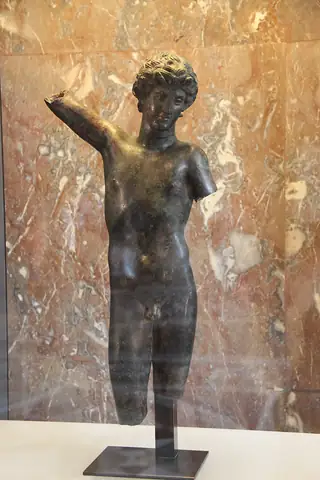
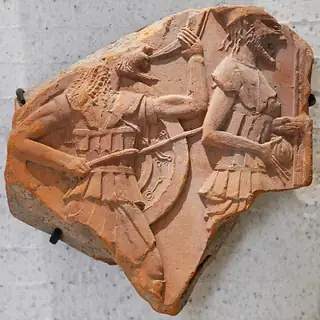
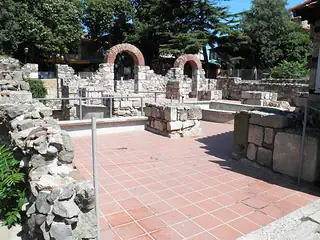
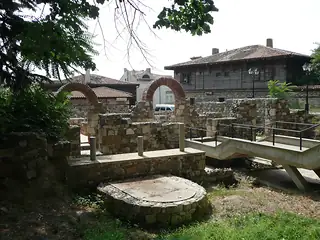
What survives to look at: the southern fortress wall and tower complex on the seaward promenade, which includes a fifth- or sixth-century granary and a well cut in the fourth or third century BC; foundations on St Cyricus island, where the temple of Apollo stood; and the museum on Han Krum square, which holds the finest collection of ancient Greek vases in Bulgaria, stone and lead anchors from the second and first millennia BC, and the oldest water-supply system yet found in the country. Start there.
Photographs




Where the information comes from
About & sources
Last checked Sep 17, 2026
Descriptions, recommendations and the audio scripts are written for this guide.
Report a problem